

Your teeth hurt because the whitening worked. That's not a reassurance it's a description of the mechanism. Peroxide whitens by passing through enamel, and everything it passes through on the way to the stain is the same tissue that now flinches at cold water. The sensitivity isn't a side effect of peroxide whitening. It's the same event, felt from the inside.
Why teeth become sensitive after whitening?
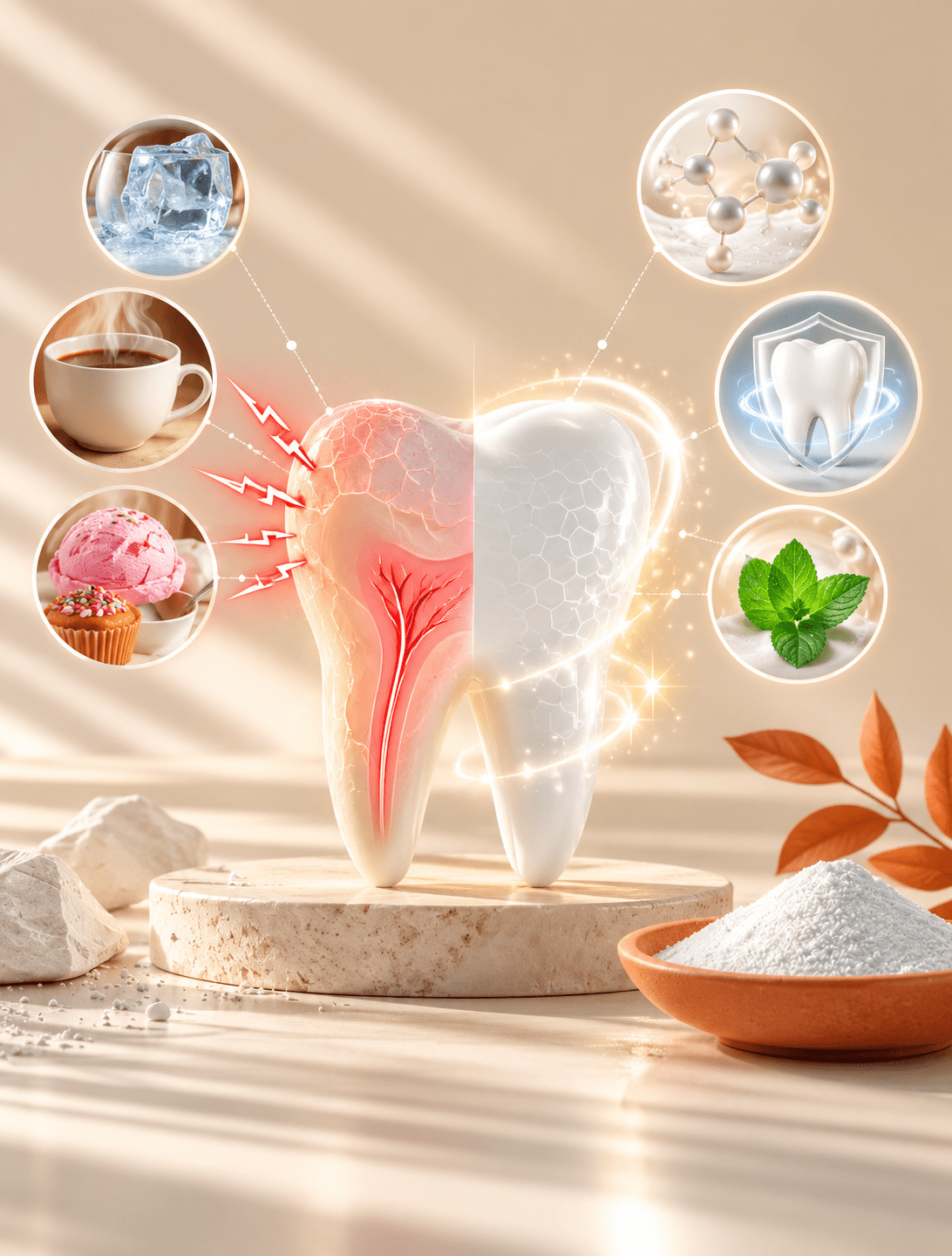
Enamel looks solid. Under magnification it's a dense field of microscopic channels running towards the dentine beneath, and dentine is threaded with tubules that lead directly to the nerve. Hydrogen peroxide, and the carbamide peroxide that breaks down into it, is small enough to travel that route. That's the whole point it needs to reach stain that sits inside the enamel, not just on it.
The problem is that it doesn't stop at the stain. Peroxide reaching the dentine temporarily dehydrates it and irritates the pulp. The nerve responds the only way a nerve can. Most people notice it within hours: sharp, brief pain on cold drinks, cold air, sometimes brushing. It usually resolves in 24 to 72 hours as the tissue rehydrates, which is why manufacturers call it transient and why that word is doing so much work on the packaging.
There's a second, quieter route. Peroxide gels are acidic, and repeated exposure softens the enamel surface slightly, opening more of those channels for the next application. This is why sensitivity tends to build across a course of treatment rather than staying constant each session makes the enamel a little more permeable to the one after it. It also explains why the people who report the worst sensitivity are often the ones who followed the instructions most diligently.
What the research says about peroxide sensitivity?
Sensitivity is the most reported adverse effect of peroxide whitening in clinical studies, and it's not rare. Across trials of at-home peroxide products, somewhere between half and two-thirds of participants report it, with higher concentrations and longer wear times producing more of it. Gum irritation is the second most common complaint, caused by the same chemistry meeting soft tissue instead of enamel.
The standard advice is to use a desensitising toothpaste for two weeks beforehand, whiten less often, and avoid cold food afterwards. All of that's management. None of it's prevention, because the mechanism that whitens and the mechanism that hurts are the same mechanism. You can't keep one and lose the other while the active ingredient is peroxide.
There's a second ingredient that works differently. Phthalimidoperoxycaproic acid — PAP — is an oxidising agent that breaks down the double bonds in stain molecules at the enamel surface. It doesn't release free radicals in the way peroxide does and it doesn't need to penetrate enamel to work, which is why studies comparing the two report comparable whitening with a substantially lower incidence of sensitivity. Same outcome, different route, and the route was the problem.
Concentration and contact time both matter. Dentist-applied whitening uses 25 to 40 percent hydrogen peroxide for short sessions; at-home strips typically run 6 to 14 percent for 30 to 60 minutes; whitening toothpastes are lower still. Sensitivity scales with both variables, which is why the advice to 'use it less' works — it's simply reducing the dose of the thing causing the problem.
Gum irritation follows the same rule. Where the gel contacts soft tissue it causes a temporary chemical burn, visible as white patches that fade within hours. Strips cut slightly short of the gumline reduce this; peroxide trays that overflow are the worst offender.
The MasterMedi approach to whitening without sensitivity?
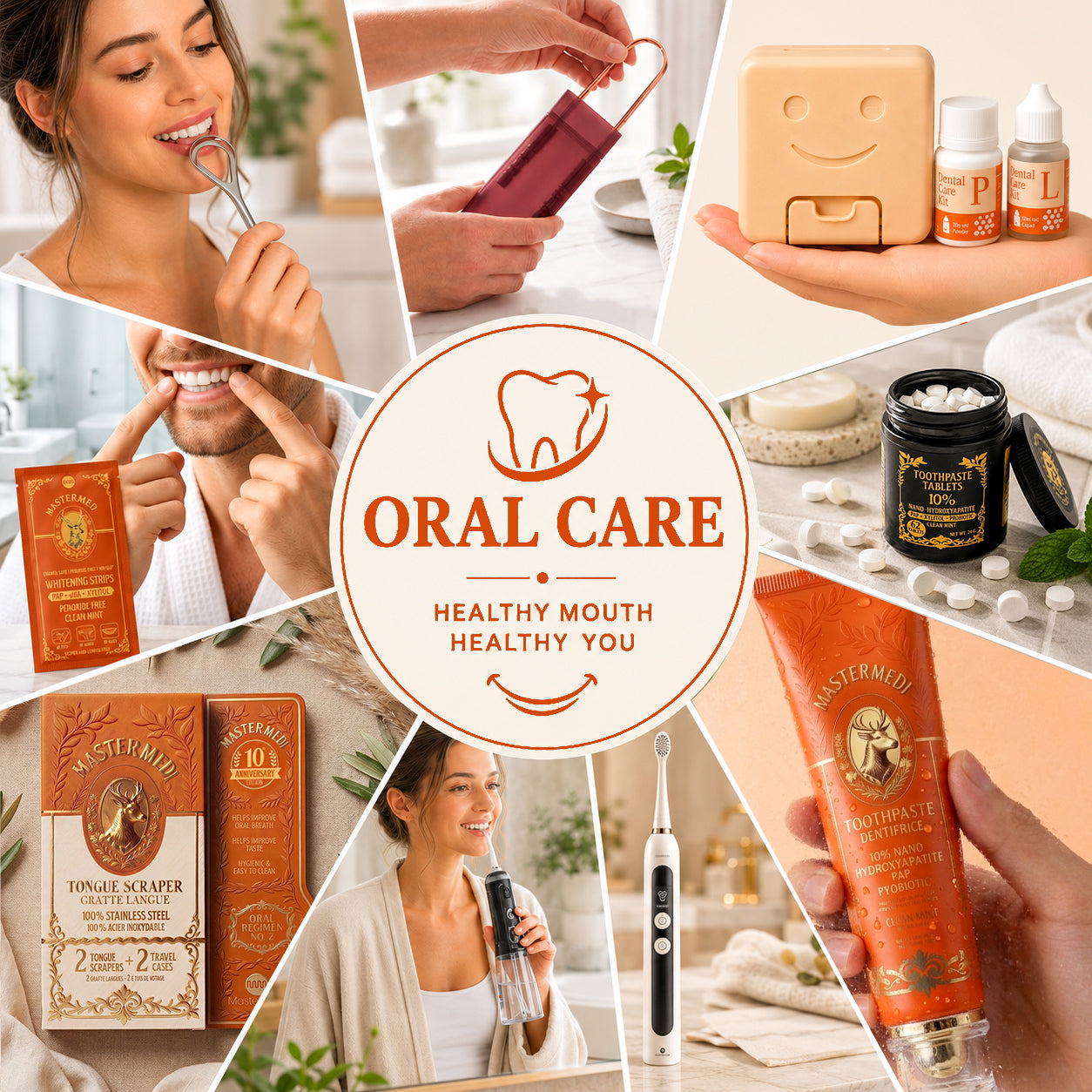
Step V of the routine is whitening, and MasterMedi's PAP+ Whitening Strips are formulated without peroxide for precisely this reason. PAP handles the stain at the surface. Nano-hydroxyapatite — the same mineral enamel is made of — is included in the formula to remineralise the surface as it works, so the strips aren't just avoiding damage but actively replacing lost mineral. Thirty minutes, no waiting period before coffee, no two days of lukewarm food.
How to whiten without sensitivity: step by step
- Brush and scrape first. Whitening works on clean enamel, and a coated tongue undoes the fresh-mouth feeling before you have finished.
- Dry your teeth with a tissue. Strips adhere better to a dry surface and stay where you put them.
- Apply the strip gel-side to the teeth, fold the excess behind, and press along the gumline.
- Leave for 30 minutes. Do not sleep in them.
- Remove, rinse, and carry on with your day — no food restrictions.
- Repeat daily for 14 days, then as needed to maintain.
If you already have peroxide sensitivity from a previous product, wait until it has fully settled before starting. PAP won't aggravate it, but there's no reason to whiten into a sore mouth.
What to avoid when whitening sensitive teeth
Skip charcoal and chlorine dioxide products entirely. Both whiten by abrasion or etching — removing the outer enamel layer along with the stain — which is a permanent trade for a temporary result and makes sensitivity worse over time. Skip 'natural' whitening with lemon juice or baking soda for the same reason. And don't double up: using peroxide strips and a peroxide toothpaste in the same fortnight compounds the dose without improving the outcome.
Common questions about teeth sensitive after whitening
How long does sensitivity after whitening last?
Usually 24 to 72 hours after peroxide whitening. If it lasts longer than a week, stop whitening and see a dentist — it may be an existing issue the peroxide has exposed rather than caused.
Can I whiten my teeth if I already have sensitive teeth?
Yes, but not with peroxide. A PAP-based product doesn't use the penetration mechanism that triggers sensitivity, which makes it the appropriate choice for anyone whose teeth already react to cold.
Does PAP whiten as well as peroxide?
Clinical comparisons report comparable whitening over the same period. PAP works at the surface, so results build over two weeks rather than arriving after a single high-concentration session.
Will nano-hydroxyapatite help with sensitivity?
It can. nHA fills exposed dentine tubules and remineralises the enamel surface, which is why it appears in desensitising toothpastes. Having it in the whitening strip means the surface is being rebuilt while the stain is being removed.
Whitening should change the colour of your teeth and nothing else about them.
Thirty minutes, no peroxide, no flinch. The PAP+ Whitening Strips are Step V.


Leave a comment
This site is protected by hCaptcha and the hCaptcha Privacy Policy and Terms of Service apply.